Hesse Mechatronics

Smart Welder SW1089

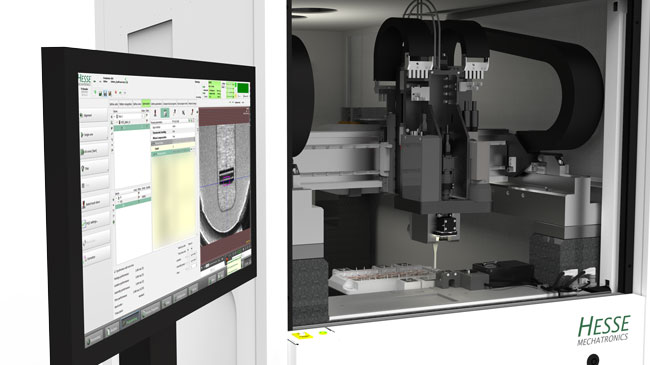
Smart Welder SW1089 – Ultrasonic Welding Machine with large, fully accessible working area – for terminals, pins, copper rivets and sleeves

Smart Welders combine the best of two technologies:

  • The force and ultrasonic power of ultrasonic welding equipment
    and
  • The flexibility, precision, speed and advanced process control features of wire bonding machines

Smart Welding is the leading-edge technology in producing ultrasonically welded connections. This is due to increased process control, driving the limits of connecting different material combinations (e.g. for applications like power electronics and battery packs).
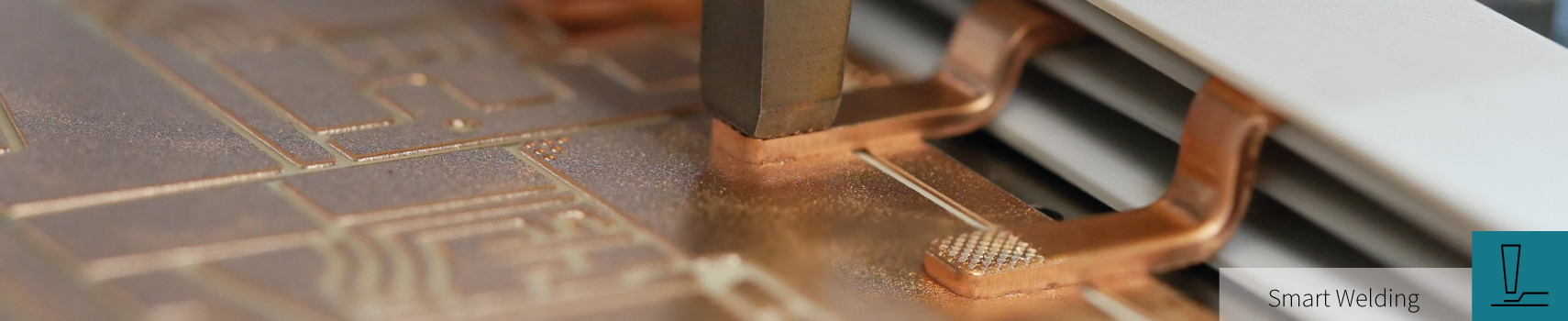
Smart Welders by Hesse, can precisely position a sonotrode to a product. An image recognition system determines the exact weld location very quickly and accurately, based on a derivation of an optimal trajectory. Together with long and narrow sonotrodes, this allows small pitching and compact products/higher power density.
Further advanced functions include touchdown sensing, precise and dynamic contact force control, diverse process control features such as monitoring of ultrasonic characteristics and deformation (ref. DVS 2811), and standardized interfaces for assembly line integration.
Smart Welders can, like ultrasonic wire bonders, flexibly handle a large variety of products. New products only require a program change and possibly adapted clamping and automation.

  • Fully automatic ultrasonic welder with a very large working area up to 392 mm x 870 mm
  • Welding of terminals, pins, copper rivets and sleeves using different sonotrodes and machine setups
  • Image recognition for detection and correction of weld locations
  • Active vertical axis
  • Rotational p-axis for angle optimized process results
  • Wide range of ultrasonic (US) power
  • Ultrasonic welding as cell contacting system for battery applications
  • Narrow pitch and deep access due to long, narrow sonotrodes and pattern recognition supported positioning
  • Zero gap is performed by touchdown process not by clamping
  • Touchdown sensor to avoid damage to sensitive contact components
  • Precise and dynamic force control
  • Programmable welding maps with multi-interval processes
  • Individual parameters per weld
  • Flexibility to handle a large variety of products
  • Standardized interfaces for line integration
  • Automotive accepted process control (PiQC, patented)

Flexibility

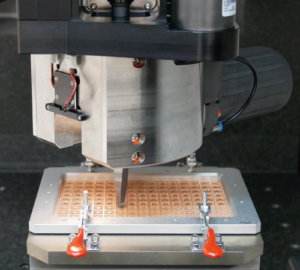
  • Flexible use of the working area, e.g. vacuum clamping
  • Maximization of throughput by automation (two/more parallel lanes)

Quality

  • Process integrated Quality Control (PiQC): detection of further parameters,
    e.g. friction behavior by additional sensor system for 100 %
    quality monitoring in real time (patented); as option
  • Full traceability of all relevant process data

Mechatronic weldheads

Rotational weldhead

  • Weldhead for up to 400W
  • Weldhead for up to 1500W
  • Rotational p-axis head
  • Longitudinal transducer system
  • Electronically controlled weld force actuator
  • Precise touchdown control (force and speed)

Material specifications

Typical material specifications for aluminum and copper.
Other parameters as in the below mentioned overview are possible, but require prior individual clarification of data such as material, geometry, objective and other application specifics.

Welding of … Terminal Pin/Rivet/Sleeve
Material Thickness
(Z)
[mm]
Area
(X x Y)[mm2]
Collar-Ø
(d) [mm]
Thickness
(z)[mm]
Length (l)
[mm]
Cu 0,2 – 1,2 1,0² – 3,5² 1,5 – 2,5 0,1 – 0,5 3,0 – 18,0
Al 0,5 – 1,2 1,0² – 4,0²  –  –  –

Working area

Smart Welder X Y Z
SW1089 – 400W 392 mm 870 mm 50 mm
SW1089 – 1500W 392 mm 870 mm 50 mm

Footprint and weight

Smart Welder W x D x H [mm] Weight
SW1089 930 x 1823 x 2040 ca. 2100 kg
excl. attached parts like e.g. status lamp, control panel etc.

Media connectivity

  • Power supply 100-240VAC
  • Gigabit-Ethernet (TCP/IP)
  • USB-Ports
  • HDMI
  • Compressed air (CDA clean, dry air)
  • Vacuum
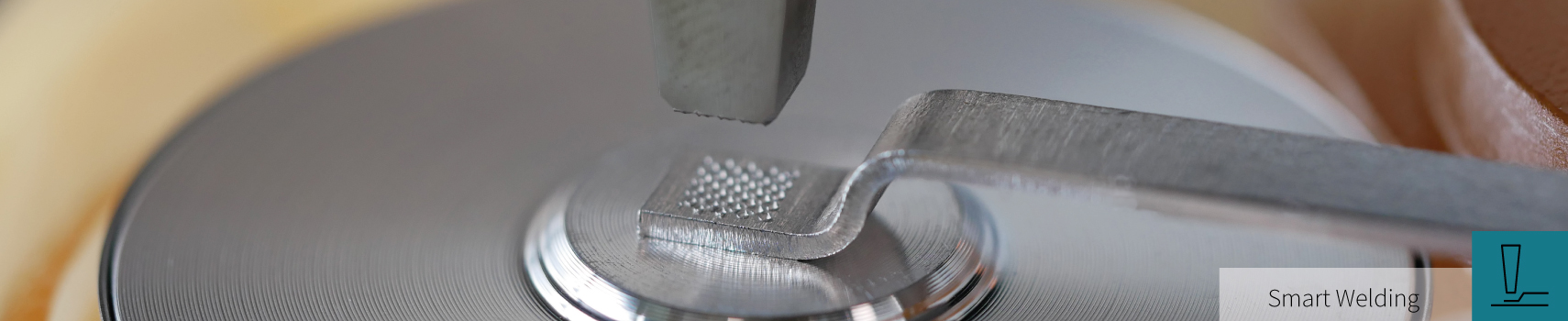
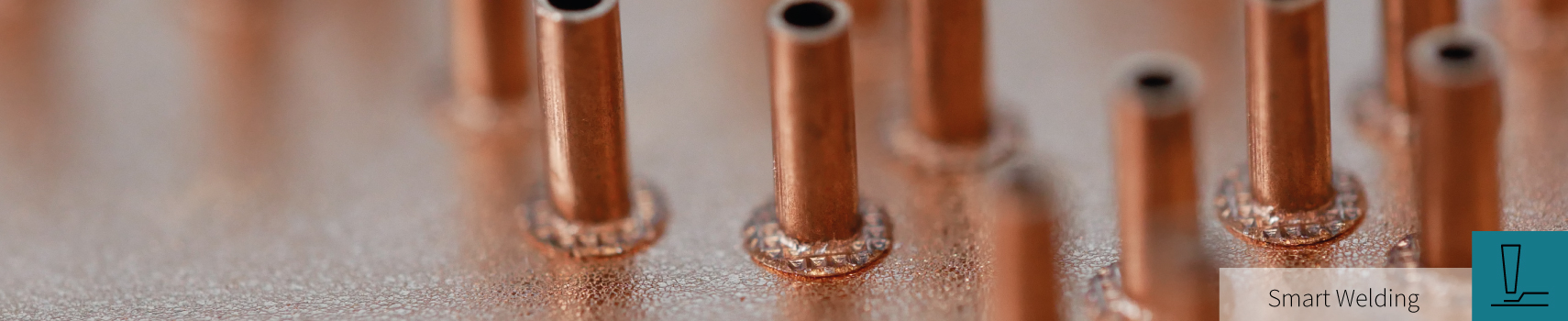
Welding of terminals, leadframesWelding of pins and sleeves
  • Contacting system for aluminum and copper; typical use for batteries and power electronics
  • High speed, precise process control and highest accuracies in the field of metal welding with ultrasonic
  • High current
  • Low resistance
  • Direct copper-to-copper connections of pins, rivets and sleeves in power electronics
  • Production process at room temperature, therefore no thermal impact
  • Repair capability
  • Enhance existing sintering process steps due to unnecessary soldering process
    • Better thermal conductivity
    • Higher thermomechanical stability 
    • Beneficial for product lifetime
  • Applikationen und Anwendungsbeispiele

    Terminals on Power ModulsTerminals on Battery PacksSleeves on DCB
    • Terminals
    • Copper Pins
    • Leadframes

    e.g. welding of

  • Cu leads on DCB (inverter)
  • Power Pins
  • Sense Pins
  • Flex PCB to PCB
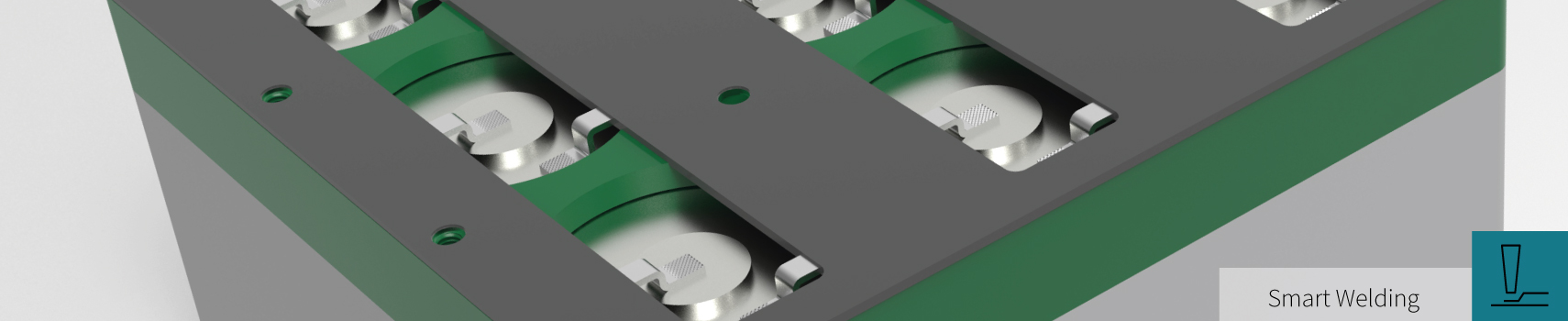
  • Cell contacting system for battery cells, battery modules and battery management system (BMS)

    • Current-carrying contacts (e.g. from cell to busbar)
    • Contacts for cell voltage monitoring (e.g. BMS)
    • Other electrical connection for connecting cells and measuring voltage

    e.g. welding of

    • Hilumin® leads on hilumin® (battery)
    • Al Leads on Al (battery)
    • Al Leads on Hilumin® (battery)
    • Al on ENIG/ENIPIG (BMS)
  • Direct copper to copper connections with superior reliability
  • Post process after sintering without influencing pre processes
  • Unique flexibility in pin layout due to programmable position of every single pin
  • Flexible use of pin material (solder pin, different press-fit pins)
  • Increased yield due to superior tolerances (even for soft solder die-attach)
  • e.g. welding of

  • Cu sleeves on DCB (power modul, IGBT-modul)
  • also for similar applications
  • Download Brochure

    Please complete the request form using the button and enter your name and business e-mail address. A download link will be sent to you after verification.

    WordPress Cookie Plugin by Real Cookie Banner